Describe the user outcome, system boundary and current source of friction.
System architecture patterns library
Reuse the structure.
Keep the trade-offs.
A researched field guide to 30 dependable patterns for software platforms, integration, data, AI, graphics, security and operations.

30RESEARCHED PATTERNS
07SYSTEM FAMILIES
Structure before product choice
Use conditions and operating consequences
Last researched 27 Jul 2026
Architecture as a decision system
A pattern names
a recurring choice.
Patterns are reusable structures, not automatic answers. Each one changes state ownership, failure boundaries, delivery speed and operating load. The useful question is not whether a pattern is fashionable, but whether its forces match the system you need to run.

PATTERN ANATOMY / 06 CONNECTED LAYERS
Read beyond
the diagram.
- 06ContextBusiness objective, users, environment and non-negotiable constraints
- 05ForcesScale, latency, isolation, consistency, change rate and team ownership
- 04StructureComponents, contracts, data paths and control-plane relationships
- 03StateAuthoritative records, temporary context, replication and recovery
- 02EvidenceSignals that prove the pattern is meeting its intended outcome
- 01Trade-offComplexity and failure modes accepted in exchange for the benefit
Architecture decision chain
Compose with
measured intent.
Start with constraints, select the smallest useful structure and connect it to evidence. A pattern becomes dependable only when the team can operate its failure modes.
Fix targets for latency, consistency, isolation, cost, recovery and ownership.
Combine only the patterns whose roles and state boundaries remain explicit.
Choose the signals that will expose saturation, drift, failure and user impact.
Test partial failure, retry, rollback, overload and emergency access before launch.
Review the decision when demand, regulation, teams or product boundaries change.
System patterns directory
Choose for the forces
you actually have.
Filter by system family, delivery path, state model and implementation complexity. Each profile connects intent to mechanics, operating evidence, failure boundaries and an official primary source.
No matching patterns
Try another family, delivery path, state model, complexity or search term.
Decision comparison
Compare structures
that solve the same pressure.
Choose up to three compatible patterns. The first selection establishes a shared decision pressure, preventing a misleading comparison between unrelated structures.
0 of 3 selected
Pattern composition
Connect patterns.
Do not blur ownership.
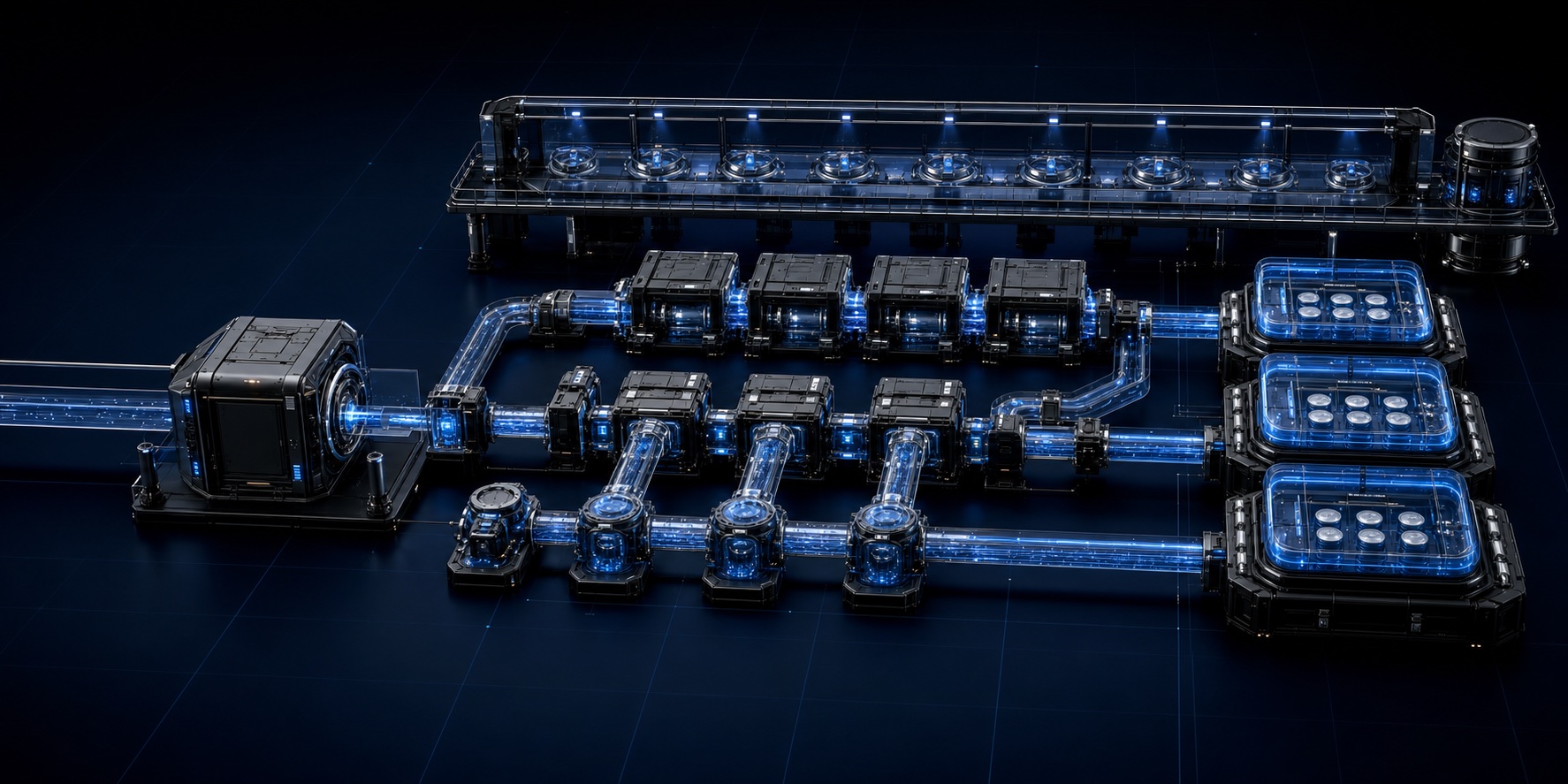
Production architecture is usually a composition, not one pattern. Every connection should preserve a clear system of record, failure boundary, policy decision and operating signal.
- 01 / FLOW
- Show how requests, events, state and control move across the complete path.
- 02 / AUTHORITY
- Name which component may decide, write, approve, retry and recover each step.
- 03 / EVIDENCE
- Join technical telemetry to the user and business outcome the composition exists to serve.
Research method
Useful patterns need
operating evidence.
Each entry is mapped to its intended pressure, structure, state ownership, failure boundary and measurable signal. Maturity describes the pattern, not a guarantee that it fits a particular system.
Name the pressure
Start from a recurring system force, not a technology label or vendor product.
Describe the structure
Show boundaries, flow and state ownership clearly enough to test the decision.
Expose the cost
State the failure modes and operating burden accepted with the intended benefit.
Prefer primary sources
Link to standards, project documentation and architecture guidance maintained by stewards.
Compare compatible roles
Contrast patterns only when they address at least one shared decision pressure.
Date the research
Recheck implementation guidance as platforms, protocols and operational practice evolve.
Reference catalogs: Azure Architecture Center ↗ AWS Cloud Design Patterns ↗
Before committing
Six questions before
the architecture record.
Which force dominates?
Identify whether scale, isolation, consistency, latency, change or recovery drives the decision.
Where does truth live?
Name the authoritative state, every replica and the consistency visible to users.
What can fail alone?
Trace the blast radius of network, data, identity, control-plane and operator failures.
Who owns each boundary?
Assign contracts, deployment, data, alerts and recovery to accountable teams.
How will it be proven?
Set performance, reliability, security and user-outcome evidence before implementation.
How will it be removed?
Define the conditions that simplify, replace or retire the pattern as the system changes.
Engineering the system
From architecture choice
to operational software.
ADOR.IS designs software platforms, AI systems, graphics infrastructure, data architecture and operational controls around measurable constraints and real ownership.
[email protected] ↗